MIND - Passion for Coffee -

Producing Area
−Producing Area−

To grow flavorful coffee beans, a significant temperature difference between day and night is required. Consequently, coffee production is concentrated in Central and South America, located directly under the equator where days are hot and nights are cold. By growing the coffee over a long period of about five years in high-altitude regions with these extreme diurnal temperature shifts, the green beans (the seeds of the coffee cherry that become the coffee beans) become dense and firm, resulting in a coffee with a rich, highly concentrated flavor.

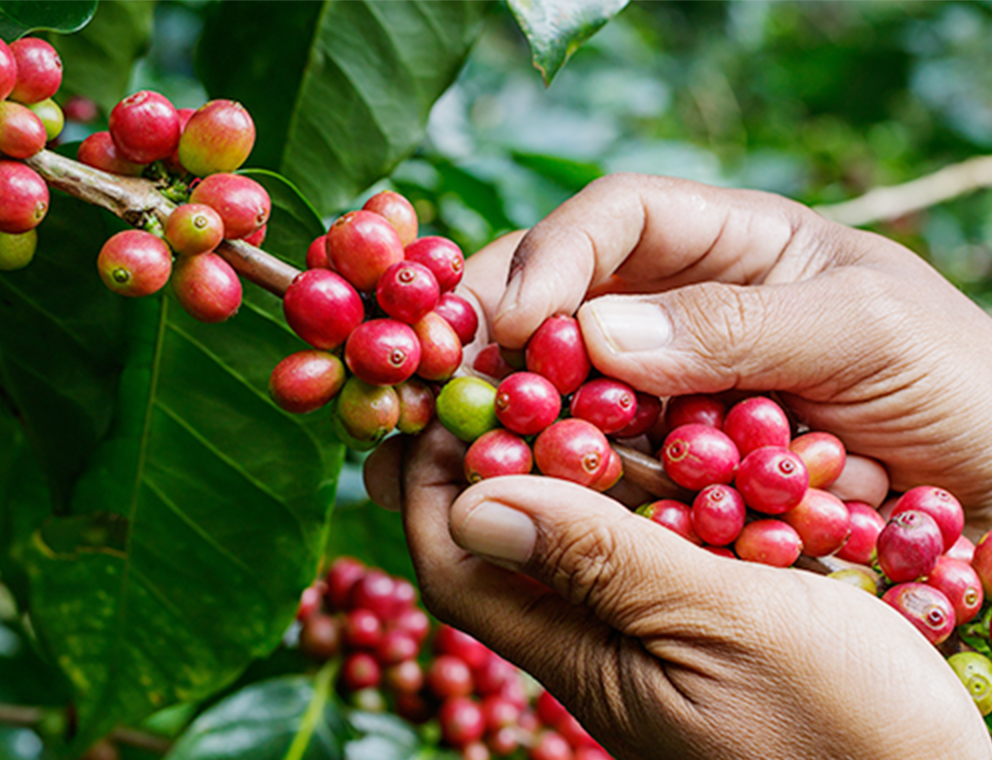
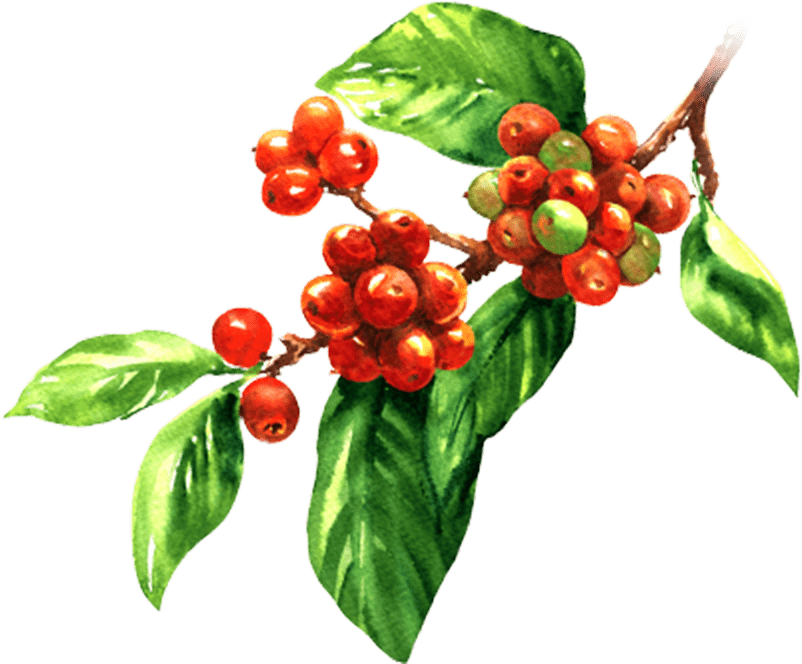
Coffee fruit is called "coffee cherry" because the ripe, deep red fruit resembles a cherry. During the harvest season, only fully ripened coffee cherries are hand-picked one by one, and they are shipped after undergoing processes such as depulping, fermentation, and drying.
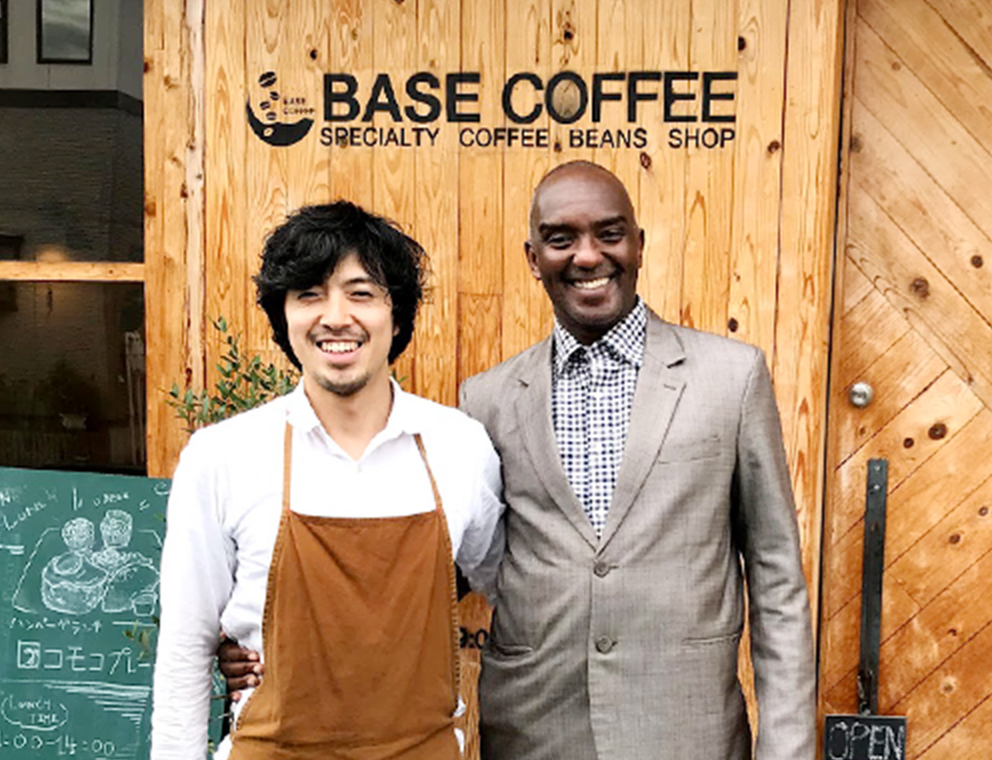
We want to deliver to our customers coffee beans that are filled with the passion of the people who cultivate them in lands far away from Japan. With this sole focus, BASE COFFEE has traveled to Rwanda, Africa, to communicate directly with coffee farmers, placing great importance on these connections. David, who cultivates and processes coffee beans at Huye Mountain in Rwanda, is a passionate producer who not only delivers delicious, high-quality coffee to Japan through various initiatives but also visits Japan himself to share information about the production process and the producers' dedication—things that are not widely known in Japan.

At BASE COFFEE, we maintain ongoing relationships with producers like David so that we can continue to offer only those coffee beans that are filled with such dedication, rather than beans grown for mass production.
Roasting
−Roasting−

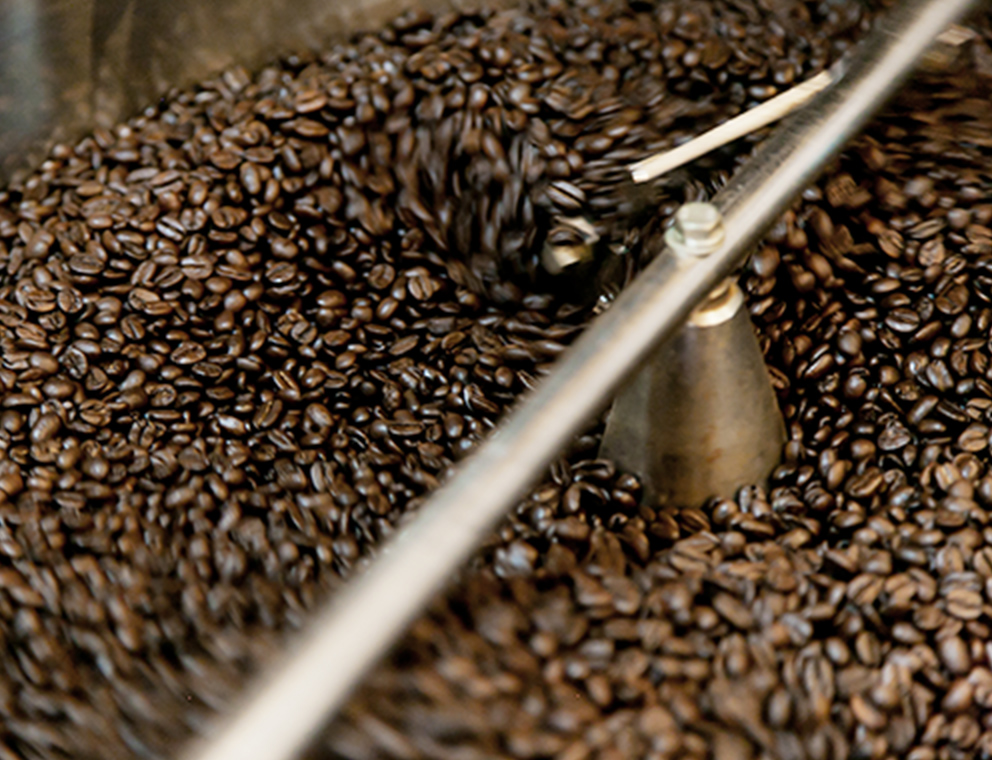
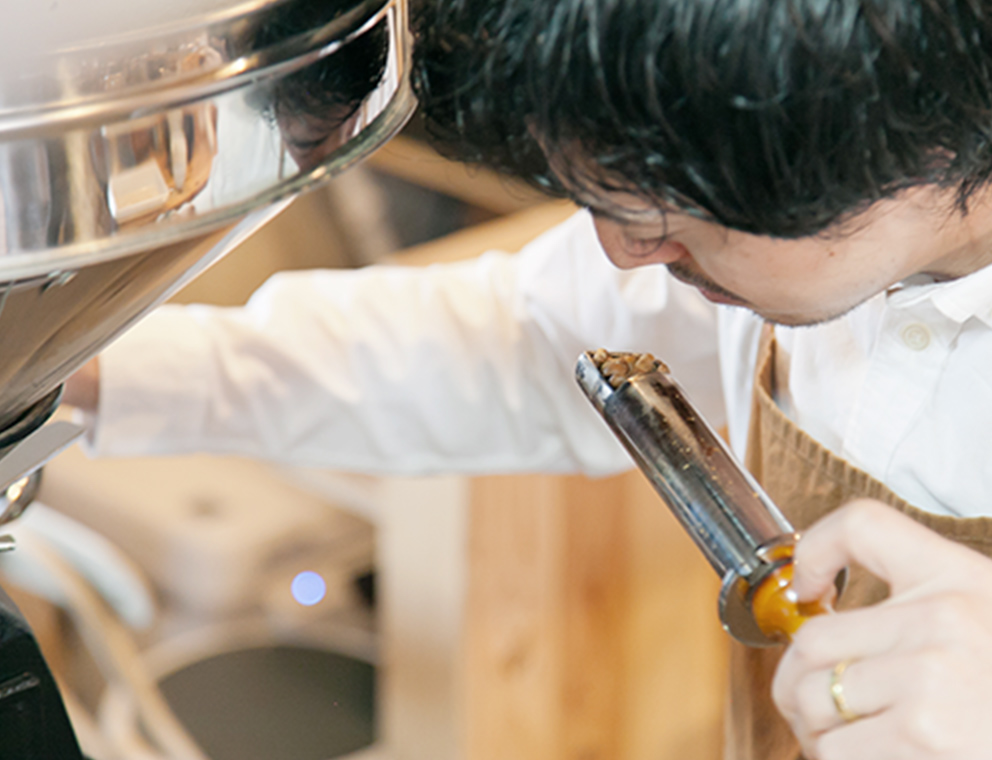
Roasting is a process where daily variations in temperature, time, season, and climate affect the coffee's flavor. Because even the slightest airflow can change the temperature inside the roaster, it requires constant, unwavering attention. Furthermore, since coffee beans are an agricultural product and their taste and handling vary depending on the soil and climate of their origin, one must determine the optimal roasting temperature and time whenever handling a new batch of coffee beans.

At BASE COFFEE, we assess the day's temperature, humidity, and the condition of the green beans. Using the Fuji Royal Roaster (5kg type)—a small roaster manufactured domestically by Fuji Coffee Machine Co., Ltd.—we adjust the temperature, gas pressure, and airflow to heat the beans to approximately 187–190°C for medium roasts, 191–203°C for medium-dark roasts, and 204–213°C for dark roasts, before cooling them.

BASE COFFEE's medium roast is characterized by a distinct aroma of its origin and a clean taste; the medium-dark roast features a fragrant aroma and a mild, accessible flavor; and the dark roast is defined by a smoky aroma and deep richness, recommended for those who enjoy their coffee with milk. For all our coffee, we aim for a "clean-tasting coffee you can drink every day," and we put our heart into roasting in small, careful batches.


Grinding
−Grind−

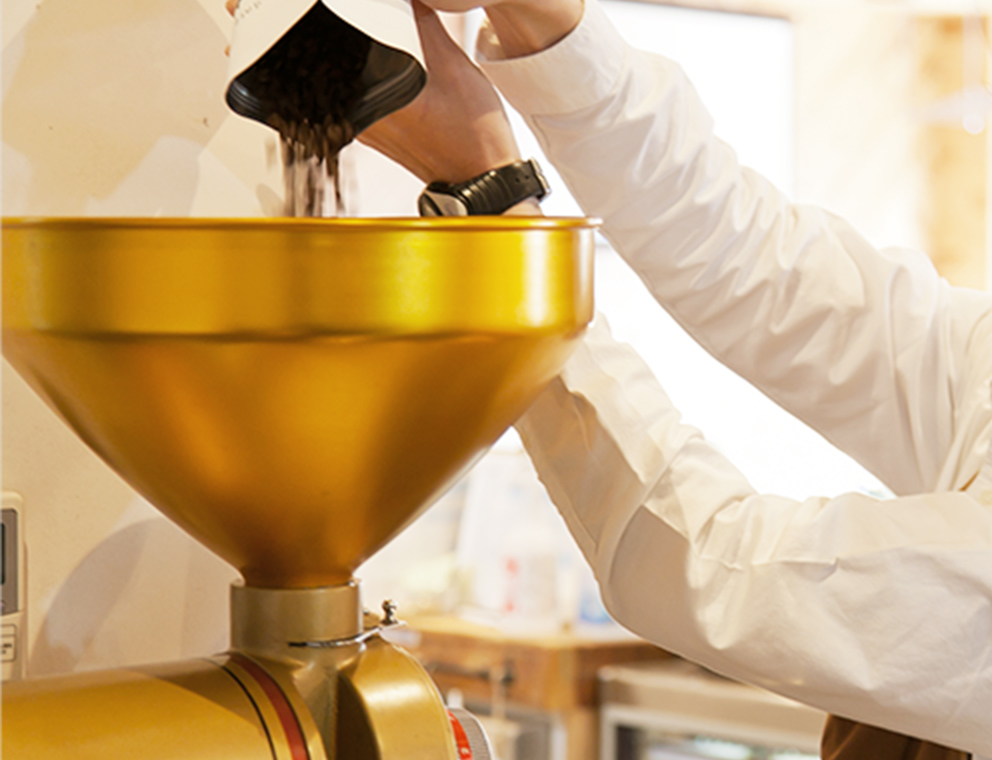
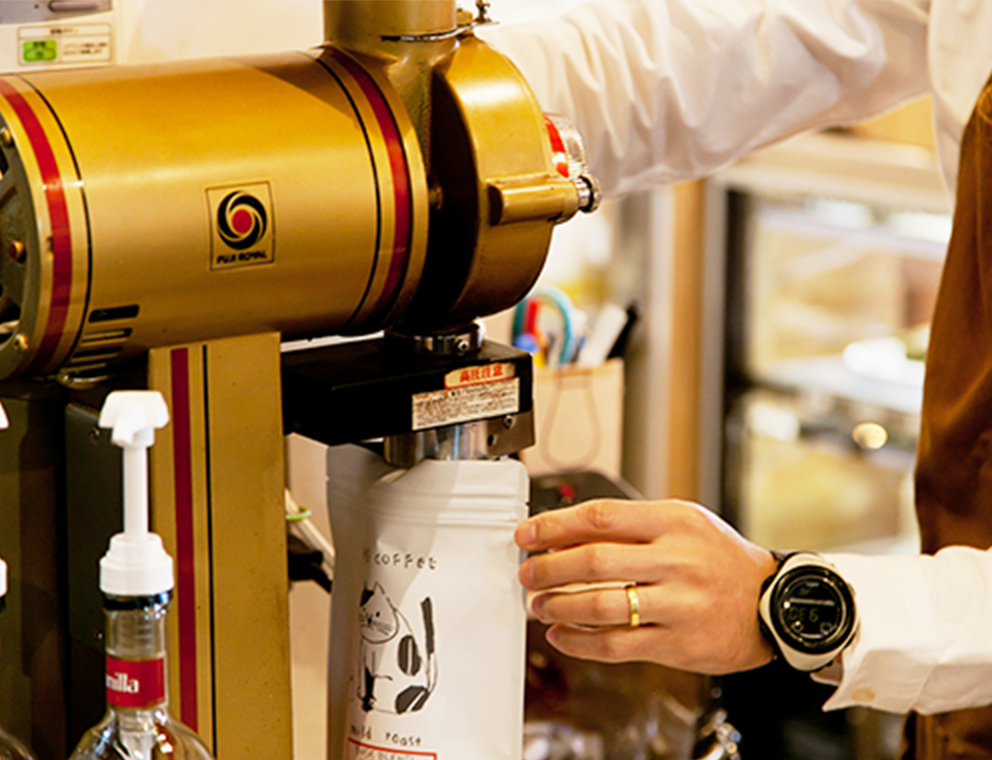
Grinding coffee is a task that requires precision, as the method of grinding directly affects the coffee's aroma and taste. To prevent the loss of aromatic compounds, friction heat must be minimized, and to ensure a uniform extraction concentration, the particle size must be consistent. Because of the meticulous care required, BASE COFFEE uses professional-grade grinders that can maintain this uniformity.

The size of ground coffee particles is called "grind size." Small particles are "fine grind," large particles are "coarse grind," and those in between are "medium grind." Because it is necessary to adjust the grind size according to the brewing equipment used—fine grind for espresso machines, medium grind for coffee makers and hand drips, and coarse grind for coffee presses—you can enjoy a flavorful, aromatic coffee by selecting the appropriate grind.

At BASE COFFEE, professionals certified as Coffee Instructors by the All Japan Coffee Association and Coffee Meisters by the Specialty Coffee Association of Japan handle everything from roasting to grinding. Therefore, we are able to suggest the best brewing methods and grind sizes for various types of extraction equipment.


Storage
−Storage−

Because coffee beans do not show visible signs of spoilage, they are often treated as if they have no expiration date. In reality, oxidation begins the day they are roasted, and they gradually lose their freshness. While they don't become undrinkable just because oxidation has begun, it does cause a deterioration in the aroma and flavor of the coffee.

To enjoy fresh coffee for a long time, it is important to store the beans while maintaining their freshness. To preserve freshness, store coffee beans or grounds in an airtight container, such as a zippered bag, which not only reduces exposure to oxygen but also protects them from ultraviolet light, high temperatures, and humidity. Additionally, you can slow down the rate of deterioration by removing as much air as possible from the bag; store whole beans in a cool, dark place or the refrigerator, and ground coffee in the freezer.

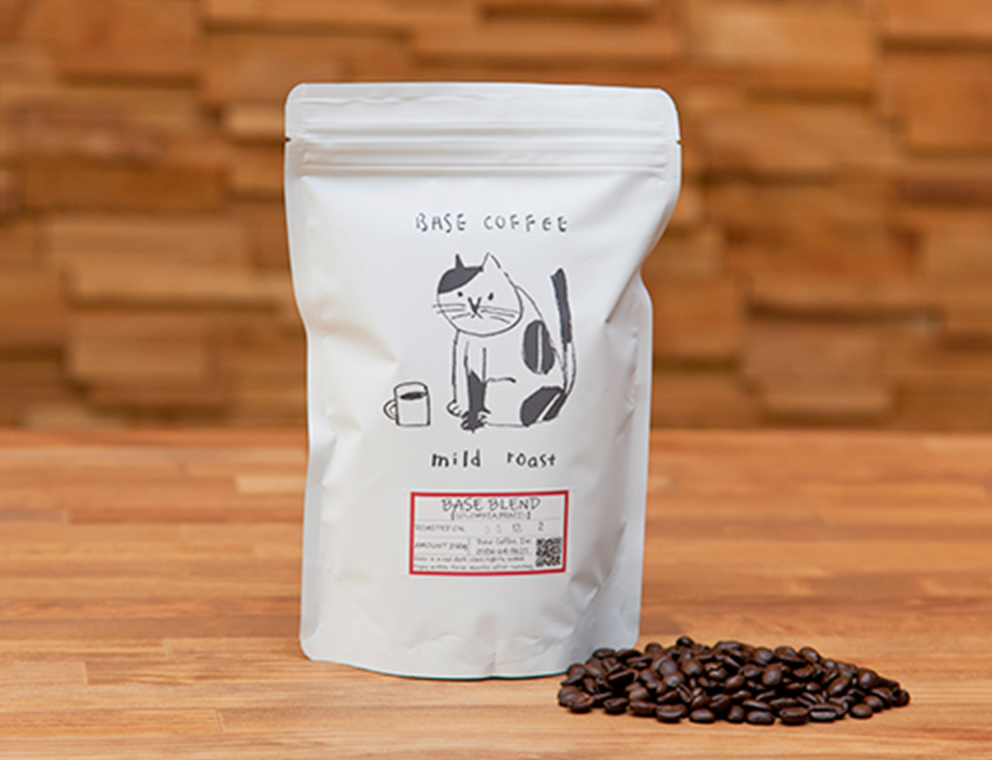
BASE COFFEE only handles coffee beans within 7 days of their roast date. To ensure that you always enjoy fresh coffee, we deliver our products in specialized resealable coffee bags equipped with an "Aroma Keep" function, which allows gases emitted from the coffee to escape while preventing outside air from entering.