
Martin's Coffee and Movies: The Great Escape and Wartime Coffee
The best thing that's happened to me recently is someone telling me that the coffee I brew is their favorite! I'm Marchin, a staff member!
This is the fifth installment of our column focusing on coffee in movies, and this time we'll be looking at a slightly older film...
The film I'll be introducing is the 1963 Western movie, "The Great Escape."
Although coffee makes only a brief appearance in this film, famous for its lively theme song and assembly of distinguished actors, its appearance is very memorable.
I'll be introducing coffee in "The Great Escape," one of my favorite movies!
Click here for the column about the fourth installment, "Coffee ni Samenai Uchi ni" (Before the Coffee Gets Cold) →Coffee and Temperature in "Before the Coffee Gets Cold"
Synopsis of "The Great Escape"
"The Great Escape" (original title: The Great Escape) is a representative work directed by John Sturges, released in 1963, based on a true story, and is a war film without combat scenes.

The synopsis of "The Great Escape" is...
The setting is Germany during World War II. A certain prisoner-of-war camp held many British and American soldiers. Tired of the constant escapes, the German army planned to gather habitual escapees in this newly established camp, implement strict security, and monitor them collectively.
"Escaping from the camp is impossible. Stop your futile struggles and behave," the commandant warned, but the mission of the captured soldiers was "to escape and cause as much confusion to the enemy as possible," so giving up was not an option.
Fortunately, the camp was filled with seasoned veterans who had escaped numerous times—informants, forgers,
and various specialists like tunnel diggers. They embarked on an unprecedented plan to help 250 prisoners escape...
...and so it goes.
The tension of the escape plan steadily progressing behind the scenes while outwardly living quietly in the camp, and the comical and relaxing atmosphere woven in throughout, draws you in, and the approximately 3 hours fly by.
The cool appearances of masculine actors like Steve McQueen and Charles Bronson are also highlights.
Coffee in "The Great Escape"
Actually, coffee appears only briefly in "The Great Escape," and the liquid coffee itself doesn't make a proper appearance. However, in this movie, coffee solves one problem while simultaneously destroying another plan.
There's a character who connects "The Great Escape" with "coffee."
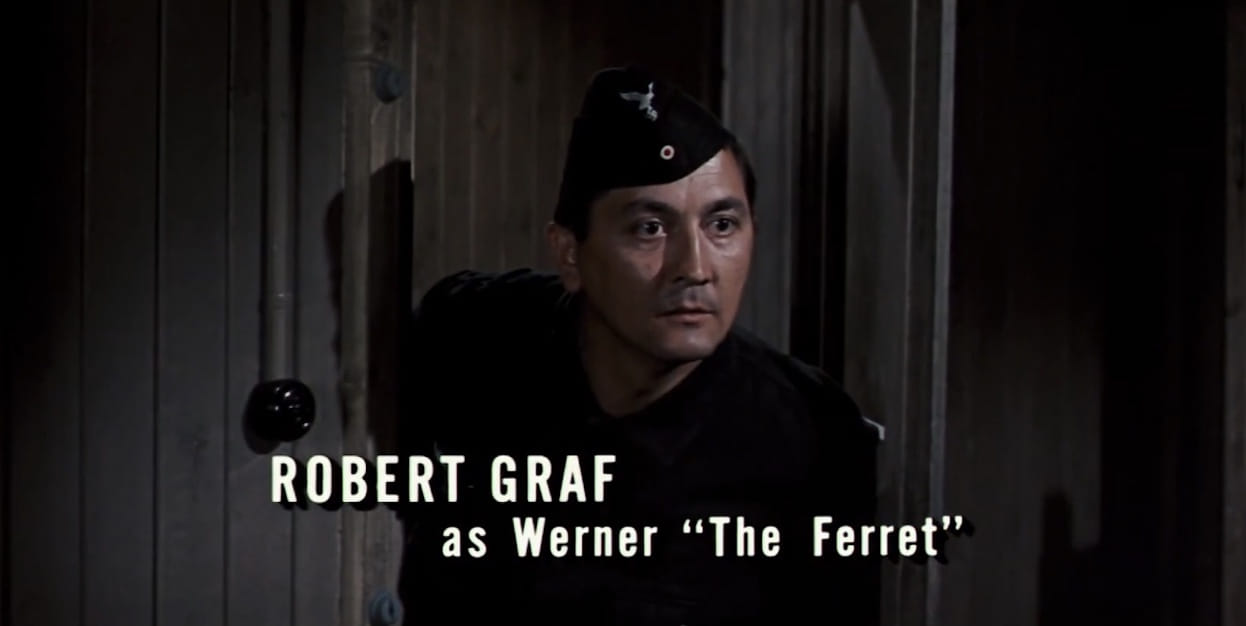
That is Werner, one of the German guards. His love for coffee works both positively and negatively for the soldiers planning their escape.
One example is when Hendley, the scrounger, was told to procure an original identification document to forge.
He set his sights on Werner, a slightly careless guard. Hendley skillfully approached him, starting a casual conversation while Werner was gazing out the window.
Werner initially declines Hendley's offer, "Why don't we talk at length in my room?", saying he'd be sent to the front lines if he were seen befriending a prisoner...
But he gives in to the single phrase, "I'll brew some coffee... real coffee..." and ends up following Hendley to his room.

Afterward, Hendley succeeded in cleverly stealing his identification and wallet.
Another instance occurred on July 4th, American Independence Day, when the escape tunnel was nearing completion.
American soldiers Hilts, Hendley, and Goff celebrate the holiday by serving sweet potato shochu to everyone in the camp.
While all the prisoners were gathered in the square, celebrating, German soldiers, including Werner, went through the deserted barracks to check for anything suspicious.
The room with the hidden tunnel was also searched, but it was deemed clear, and the German soldiers were about to withdraw without incident... or so it seemed, until Werner, who had remained alone in the room, confirmed that everyone else had left and secretly reached for the coffee in the room.

Werner accidentally spills the coffee, hears the sound of coffee flowing from the floor where nothing should be, and discovers the tunnel.
Coffee During Wartime as Seen in "The Great Escape"
In "The Great Escape," we see Werner breaking rules for coffee and trying to drink coffee held by prisoners while avoiding watchful eyes. But why was he so eager to drink coffee?
This is related to the coffee situation during wartime. Here, I'll explain what coffee was like during World War II!
Why Werner was eager for coffee
Werner's inability to resist coffee is linked to the wartime coffee supply situation.
During World War II in Germany, coffee was not something that could be easily obtained.
One reason for this was an agreement made by the United States with Central and South American countries...
When the war began, an agreement was made between the U.S. and coffee-producing nations in Central and South America, stating that "the U.S. would purchase coffee from these countries at a fixed price." The main goal was to strengthen ties between the two regions, but as a result, coffee exports from Central and South American countries to the Axis powers were restricted, making it difficult for Axis countries, including Germany, to obtain coffee easily.

And another reason was that coffee was requisitioned by the military...
During World War II, coffee was requisitioned in every country. Its purpose was to be supplied to soldiers fighting on the front lines. Its stimulating and excitatory effects helped prevent drowsiness and reduce fatigue in soldiers, and it also provided comfort and helped reduce stress.
For non-soldiers, and for soldiers who, like Werner, were not fighting on the front lines, coffee was a luxury that was difficult to obtain.
Incidentally, coffee was also rationed in America, and the amount of coffee beans distributed to the public was insufficient.
It is said that one reason for the widespread popularity of "Americano coffee" was the ingenuity of making coffee with fewer beans, leading to it being brewed more lightly.
Fake Coffee
When tempting Werner, Hendley emphasizes that he has "real coffee."
The reason for emphasizing "real" is that at the time, substitute coffee made from ingredients other than coffee beans, in other words, fake coffee, was common.
Suffering from coffee shortages during the war, people who desperately wanted coffee created and drank substitutes that mimicked the taste of coffee using ingredients other than coffee.
Famous examples include...
Acorn coffee, made by roasting and brewing de-acidified acorns, and dandelion coffee, made by roasting and brewing dandelion roots. There's also chicory coffee, which uses the chicory plant from the Asteraceae family.
While these coffees were drunk as substitutes during the war, some are still consumed today, and it seems that they are now often enjoyed as beverages in their own right rather than just as coffee substitutes.
"The Great Escape" is a truly captivating film to watch. Can the captured prisoners successfully escape? If you haven't seen it, please do!
And pay close attention to how passionate Werner is about coffee.