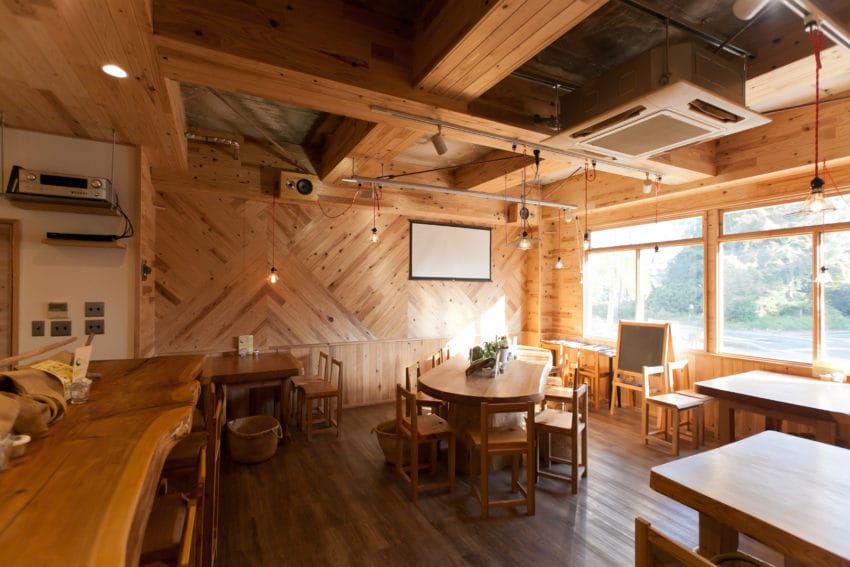
Every day, someone visits a café, a special place where people enjoy coffee and other drinks and food while spending time as they please.
At Base Coffee, too, various customers spend their time in different ways.
Many people enjoy cafe hopping, and while cafes are now ubiquitous, when did the concept of a cafe as a place to enjoy coffee first emerge? How did people in the past use cafes?
This time, we will delve into the history of the "cafe," which is now a commonplace establishment.
The Origin of Cafes: Kahvehane
In the previous column, I mentioned that Qahwa, the precursor to coffee, was consumed by Muslims. Let's explore that further here.
You can find the previous column here:
The History of Coffee Consumption
From Sufis to the People
"Coffee Qahwa," which was used by Sufis in Yemen for their rituals, was suitable for long-term storage and transportation, gradually spreading throughout Yemen.
By the end of the 15th century, Qahwa was being consumed in residential areas of Mecca and Medina, Islamic holy cities, and its spread only gained momentum.
Some scholars and students reportedly enjoyed Qahwa as a stimulant, just like the Sufis, but there were also those who simply enjoyed it as a luxury item.
For those who simply enjoyed Qahwa, something new emerged: specialized Qahwa shops, which are what we now call "cafes."
Kahvehane
Shortly after the 16th century began, it is said that the first
specialized coffee shop, "Kahvehane," was established in Mecca.
In the Islamic world, where alcohol is prohibited, Kahvehane became a special place for social interaction, like a bar where many people gathered to enjoy coffee and converse without getting drunk.
However, Kahvehane had one rule: "no women allowed."
Only men were permitted to enter. This rule was later carried over to the English coffee houses, which were based on Kahvehane.

European Coffee Houses
In the 17th century, coffee was introduced to Europe. Initially, it was a drink for the aristocracy, but with the emergence of a certain establishment, it gradually spread to the common people.
That establishment was the coffee house, a place of social interaction that would later have a profound impact on society.
The Beginning of Coffee Houses
Coffee houses were
places of social interaction for citizens, where people discussed everything from small everyday matters to national politics over a cup of coffee. They can be seen as the European version of Kahvehane, and it is said that the first coffee house in Europe opened in England.
In the 17th century, coffee was brought to Europe through various routes, and people were so captivated by the drink that it wasn't long before specialized establishments serving coffee, known as coffee houses, emerged.
Their expansion was remarkable; coffee houses that appeared at the end of the 17th century reportedly grew to over 3,000 within a few years, lining every street in London.
Around the same time, coffee houses also emerged in other countries like France and Austria, where people enjoyed coffee and conversation, sometimes even becoming catalysts for historical change.
Societal Shifts Started in Coffee Houses
Coffee houses, which gained popularity as places where people of all social classes gathered, conversed over coffee, and enhanced their knowledge, did not remain merely places for enjoying coffee.
In England, coffee houses were used as venues for stock and insurance exchanges, and as meeting points for the Whig and Tory parties, the two major political parties in Britain, thus becoming
centers for the development of London's politics and economy.
In France, they were used as editing spaces for Voltaire and Rousseau's "Encyclopédie." Furthermore, revolutionary assembly halls for those dissatisfied with the French monarchy were also coffee houses, and
it is even said that the French Revolution began in coffee houses.

Japanese Cafes
Japan, known as one of the world's leading coffee-consuming nations, reportedly encountered coffee relatively late compared to other countries, around the 18th century. Initially, its taste was not well received, and it did not spread widely among the general public.
However, during the Meiji era, establishments serving coffee gradually began to appear, and coffee became more deeply ingrained in people's lives, leading to the development of a unique culture.
Civilization and Enlightenment and Coffee Shops
Around the 1870s, during the "Bunmei Kaika" (Civilization and Enlightenment) period, when Western haircuts became common, Japanese people began to accept coffee, which had started to be imported. It was mainly sold in import food stores or offered as a new menu item at tea houses.
Subsequently, shops specializing in coffee began to emerge. These were what we now call "kissaten" (coffee shops).
Many kissaten were established at the end of the 19th century, but the era had not yet caught up with the atmosphere of coffee houses, and most of them closed within a few years.
The 20th Century and Japanese Cafes
In the 20th century, the times finally caught up with cafe culture.
An increasing number of people began to admire French cafes, and shops with coffee at the center of their menu started to appear.
In Japanese kissaten and cafes, in addition to coffee and light meals, alcohol and female servers were also a draw for customers, and it seems many establishments focused on the latter.
Among these, shops that did not offer alcohol or female servers, and instead focused on coffee and light meals, were called "jun-kissaten" (pure coffee shops). Owners with a passion for coffee researched and shared their knowledge and skills,
cultivating Japan's unique coffee culture.

The Kahvehane, where people sought social interaction and relaxation. The coffee houses, where people gathered for intellectual pursuits and sometimes influenced social affairs. The Japanese jun-kissaten, which fostered a unique coffee culture.
Looking at the history of cafes in this way, it's clear that cafes have always been more than just places to drink coffee.
Perhaps the space of a cafe holds a magical power that attracts people and makes things happen.
