
Beyond Coffee
Coffee, a beverage we casually drink every day. But do you know how coffee is made?
This time, I'd like to introduce what coffee truly is and how it's made.What exactly is coffee?
What image comes to mind when you hear "coffee"? Probably a liquid or something shaped like this... This form, called a coffee bean, is actually the *seed* of an evergreen tree called a coffee plant.
Coffee plants bear fruit once a year. Most varieties ripen to a bright red. This fruit is called a *"coffee cherry"* because it resembles a cherry.
This form, called a coffee bean, is actually the *seed* of an evergreen tree called a coffee plant.
Coffee plants bear fruit once a year. Most varieties ripen to a bright red. This fruit is called a *"coffee cherry"* because it resembles a cherry.
 The seeds inside this fruit are removed, dried, and roasted to become the brown coffee beans you saw earlier.
Conditions for making coffee
Have you ever wondered, "Isn't coffee grown in Japan?" The answer is, "It's almost impossible to grow in Japan." This is because various factors are crucial for cultivating coffee. There are mainly three such factors...Temperature
Sunshine
Rainfall
Coffee is primarily grown in tropical regions within 25 degrees north and south latitude, commonly known as the *coffee belt*. It is cultivated in the coffee belt because these regions meet these factors.Temperature
A temperature of around 22°C is ideal for cultivating coffee plants. This temperature is tricky; if it's too high, it leads to early maturation, overproduction, tree weakening, and disease, while if it's too low, it results in slow growth and reduced yields. Furthermore, without a certain temperature difference, the fruit doesn't firm up well, leading to a decline in flavor. Therefore, an altitude of *1000m to 2000m with a consistent temperature difference throughout the day*, where the temperature is neither too high nor too low, is suitable. In Central and South America, altitude is used as a quality standard for coffee, and some regions consider higher altitudes to produce higher quality coffee.Sunshine
Coffee requires a certain amount of sunlight. However, it is vulnerable to direct sunlight, so it is often planted on east-facing slopes of mountains to avoid direct exposure. In other areas, tall trees called "shade trees" are often planted alongside coffee to provide shade. However, in some regions where clouds tend to form in the afternoon, shade trees may not be necessary.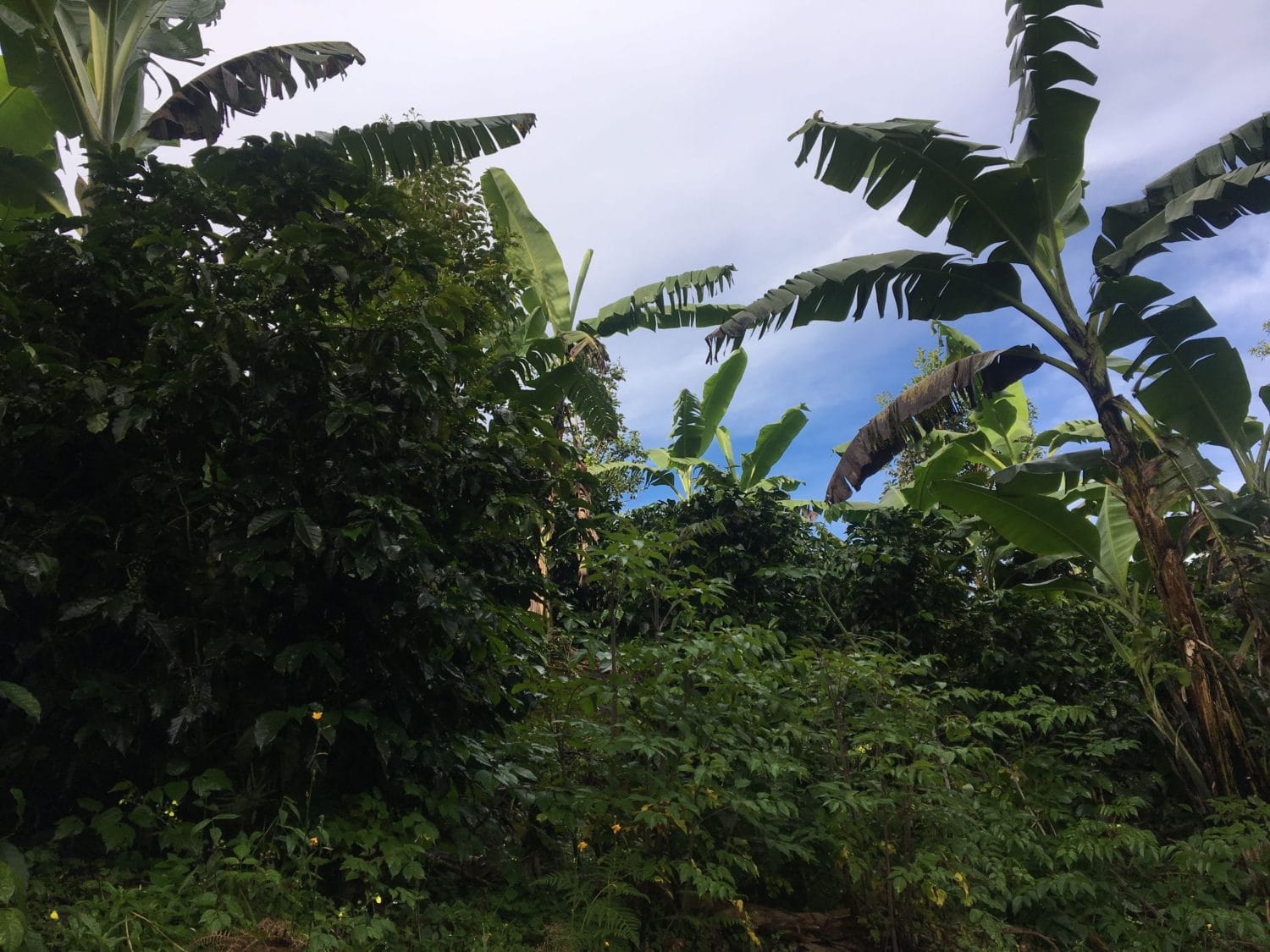
Rainfall
Coffee cultivation requires *1200 to 1600 mm of annual rainfall*. If there isn't enough rain during the period when coffee beans are enlarging, it can lead to reduced yields. Basically, tropical countries in coffee-producing regions have dry and rainy seasons. The rain at the beginning of the rainy season, known as blossom showers, stimulates coffee plants to produce fragrant, jasmine-like flowers, which then bear fruit. In Japan, it is almost impossible to cultivate coffee because these factors, especially "temperature" and "rainfall," cannot be met.
However, in some areas of *Okinawa*, which is close to the Tropic of Cancer, there are attempts to cultivate coffee.
Perhaps the day will come when we can easily drink Japanese-produced coffee.
In Japan, it is almost impossible to cultivate coffee because these factors, especially "temperature" and "rainfall," cannot be met.
However, in some areas of *Okinawa*, which is close to the Tropic of Cancer, there are attempts to cultivate coffee.
Perhaps the day will come when we can easily drink Japanese-produced coffee.
How coffee is made
Countries within the coffee belt generally have two seasons: a rainy season and a dry season. The rainy season is the "preparation period" for fruit growth, and the dry season is the "harvest period" for picking and processing the fruit.What is done during the preparation period
During the rainy season, coffee producers must remain vigilant to protect their coffee from diseases and pests. This involves spraying chemicals. Workers carry tanks on their backs or use hoses to pump chemicals dissolved in water from tanks and spray them. Nowadays, chemicals that do not harm the trees or the quality of the beans are often used. In addition to disease and pest control, thinning and pruning are necessary to prevent nutrients from dispersing. Trees are individually cut by hand.
 Because this maintenance directly impacts the quality of coffee beans, each tree must be meticulously cared for by hand. This process is mentally and physically demanding due to challenges like steep slopes, muddy ground, heavy tanks, and an endless number of trees.
What is done during the harvest season
When the fruit ripens and the dry season arrives, it's finally time for harvest! There are two harvesting methods: "mechanical harvesting" and "hand-picking." While mechanical harvesting is used in some regions, such as Brazil, most countries primarily use hand-picking by workers due to reasons like potential damage to trees and unsuitability for farms on slopes. Hand-picking, as the name suggests, is a method where workers visually identify ripe fruit and pick each one by hand. This method allows for the harvesting of ripe, high-quality fruit, thus ensuring the production of high-quality coffee beans. However, it is very time-consuming because each tree and each individual fruit is harvested by hand. Therefore, during harvest season, many people are gathered, and wages are paid according to the amount harvested. Harvesting, like maintenance, is a difficult task, involving heavy baskets, strong sunlight, and other challenges. The harvested coffee cherries are then transported and processed using machines and various other methods.
I'll introduce the processing methods in another column, so look forward to it!
Behind the coffee we drink every day lies the relentless effort of producers who strive to make delicious coffee through arduous labor.
Directly supporting them might be a bit difficult, which is why it's important to understand a little about their coffee production situation and never forget to enjoy drinking it.
The harvested coffee cherries are then transported and processed using machines and various other methods.
I'll introduce the processing methods in another column, so look forward to it!
Behind the coffee we drink every day lies the relentless effort of producers who strive to make delicious coffee through arduous labor.
Directly supporting them might be a bit difficult, which is why it's important to understand a little about their coffee production situation and never forget to enjoy drinking it.